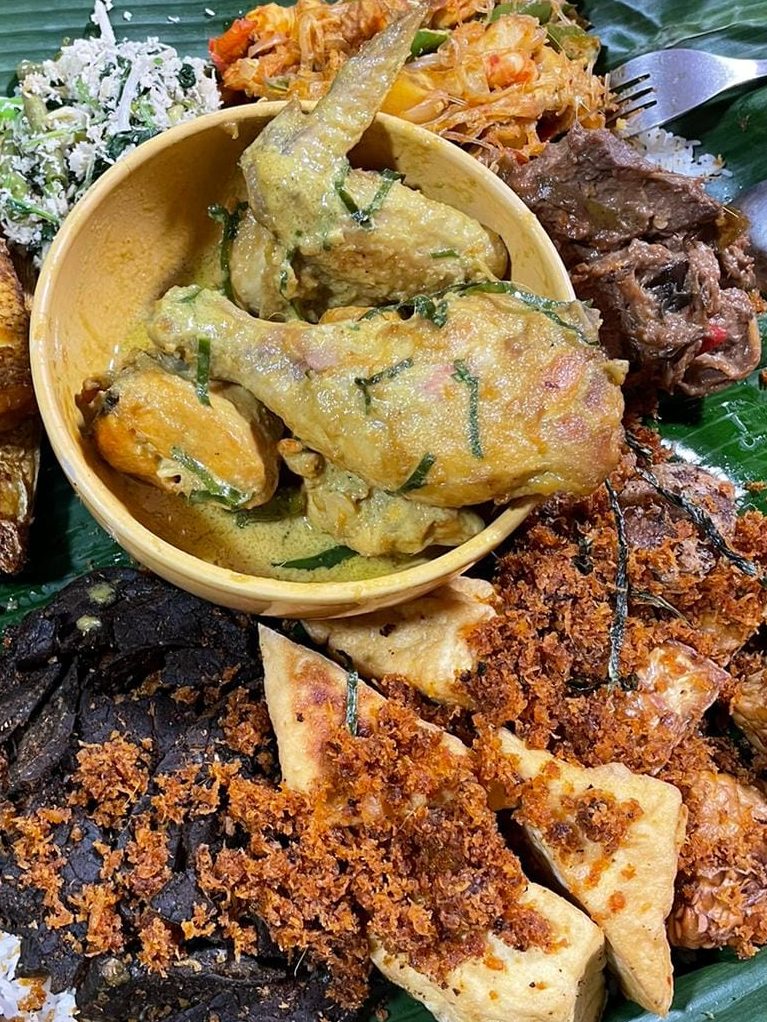
Nasi ambeng has been traditionally served during communal ritual gatherings known as slametan in Java and kenduri in Singapore.
In the traditional serving layout, the dishes are placed on banana leaves on top of the rice on a round large platter.
In the nasi ambeng we see today, it follows more of the layout of nasi tumpeng with the rice in the centre surrounded by the side-dishes all around.
The Javanese nasi tumpeng‘s layout has been said to be based on pre-Islamic notions of the mountain (Mount Meru, mandala), being the centre of life; while the side-dishes around that ‘mountain’ of rice represents the flora and fauna of the ‘mountain’. Each side-dish has its significance and message.
Given the various adaptations to Javanese cultural practices during the Islamisation of Java, the nasi ambeng could be modified from the nasi tumpeng, ignoring the ‘cosmological layout’. Hence, there is no ‘mountain’ or mount in the centre.
However, in the revival of the nasi ambeng in Singapore and away from its traditional role in communal ritual feasting, the ‘mountain’ cosmology of the nasi tumpeng has been adopted, possibly barring any reference to it’s symbolic meaning and significance.
 JavaNiche